Sleep Apnea? The One Thing CPAP Users Aren't Being Told
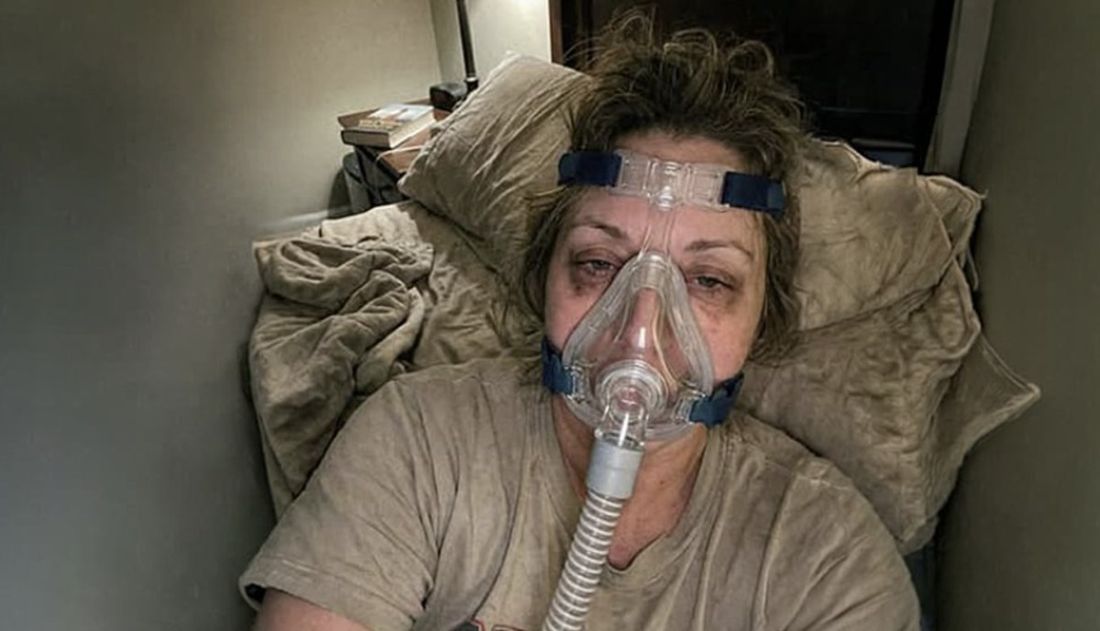
For two years, I strapped a CPAP mask to my face every single night. And every single morning, I woke up exhausted anyway.
My name is Sandra. I'm 56, I live in Tucson, Arizona, and I did everything the sleep clinic told me to do.
I paid $3,400 for the overnight sleep study. I got the diagnosis, moderate obstructive sleep apnea. I picked up the machine. And I wore it, every single night, through all of it:
- The claustrophobia: for the first month I'd rip the mask off in my sleep without even knowing it.
- The red strap marks across my cheeks that were still visible at lunchtime.
- The dry mouth and nosebleeds from pressurized air being forced down my throat for 8 hours.
- The noise: the hiss of mask leaks woke my husband Mike so many times that he finally moved to the guest room. The machine we got so I could sleep better is what put us in separate bedrooms.
- And the worst part: I was still tired. Bone-deep, all-day, falling-asleep-at-red-lights tired.
My sleep doctor called me a "model patient." My compliance report was perfect. According to the machine, I was being treated.
So why did I still feel like I hadn't really slept in years?
Last spring, at a routine follow-up, I finally broke down and asked my doctor the question I'd been afraid to ask out loud: "Is this it? Is this mask just... my life now?"
He paused for a long moment. Then he told me the one thing that nobody, not the sleep clinic, not the equipment supplier, not a single brochure, had ever told me:
"Sandra, a CPAP doesn't treat your sleep apnea. It manages it, for exactly as long as the mask is on your face. It forces air through a collapsing airway, but it does nothing about why your airway collapses in the first place. And one of the biggest reasons is something nobody at the clinic ever checks: the angle of your head and neck on the pillow you've been sleeping on." , Dr. Thomas Mitchell, MD
The Part of Sleep Apnea Your CPAP Was Never Designed to Fix
According to the American Academy of Sleep Medicine, an estimated 22 million Americans currently suffer from some form of sleep apnea. The standard answer is a CPAP machine, yet studies show more than 50% of patients abandon it within the first 12 months, and a large share of those who keep wearing it still report daytime fatigue.
To understand why, you need to understand what the machine is actually fighting against. Dr. Marcus Chen, a pulmonologist at the Cleveland Sleep Institute, explains the mechanics in simple terms:
"When your airway partially collapses during sleep, your blood oxygen drops. Your brain panics and forces a micro-arousal, you wake up for just a few seconds to gasp for air. You won't remember it in the morning. But it can happen 30, 50, even 100 times a night." , Dr. Marcus Chen, Cleveland Sleep Institute
Here's the part nobody spells out: your CPAP fights that collapse with air pressure, it never stops the collapsing itself. The moment the mask leaks, slips, or comes off at 3 AM, the obstruction is right back. The pressure never fixed anything. It just papered over it, one night at a time.
Which is why so many "compliant" CPAP users still live with:
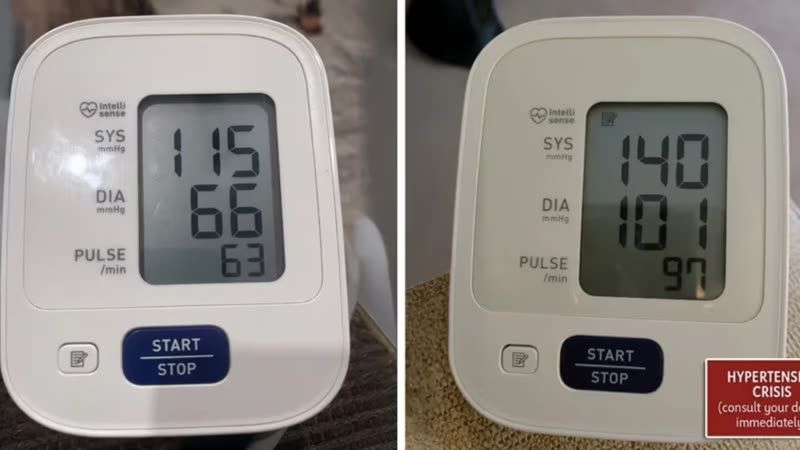
- Cardiovascular strain: every breathing pause during mask-off and leak periods spikes your blood pressure.
- Fragmented sleep: micro-arousals from mask discomfort, leaks, and pressure changes destroy deep sleep, even when the apnea numbers look "treated."
- Daytime cognitive decline: brain fog, memory issues, and slowed reaction time.
- Metabolic disruption: linked to weight gain, insulin resistance, and Type 2 diabetes.
- Mental health: significantly higher rates of depression, anxiety, and irritability.
Why "Doing Everything Right" Still Wasn't Working
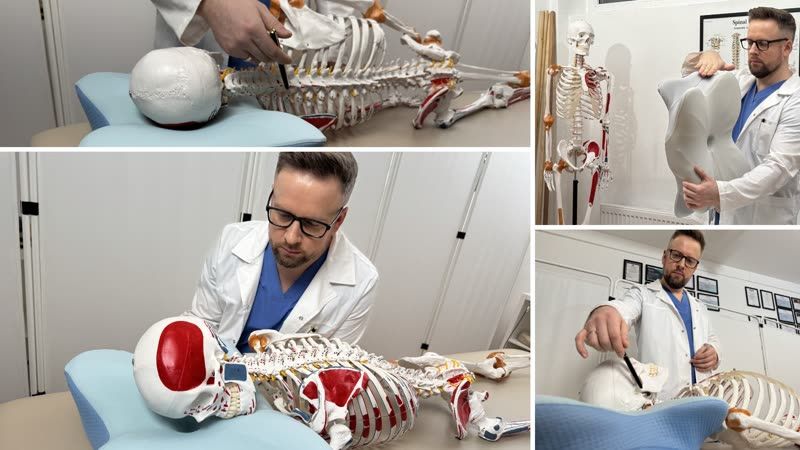
When I told my sleep clinic the CPAP was making my life miserable, they offered me the standard menu.
A custom oral appliance: $2,800, and a leading cause of long-term jaw pain, tooth movement, and bite misalignment. A different mask (my fourth). A positional therapy belt. And at the bottom of the menu, soft palate surgery, $10,000+, no guarantee of success, and a brutal recovery.
Notice what every single option has in common: they all try to force a collapsing airway open, with pressure, with hardware, or with a scalpel. Not one of them addresses what's making the airway collapse in the first place.
The One Thing They Never Check
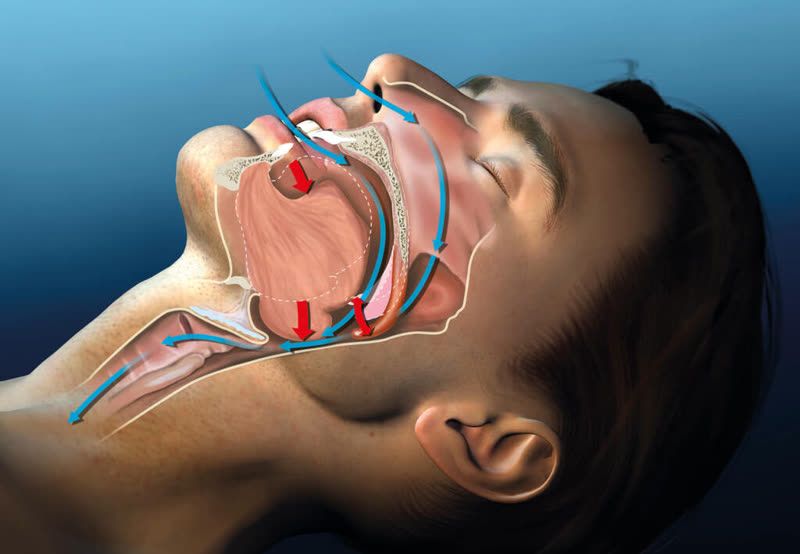
Remember what my doctor said. The position of the head and neck during sleep, specifically the angle of the cervical spine, plays a much larger role in airway obstruction than most patients are ever told. When your head tilts back, your tongue and soft palate slide rearward and pinch the airway shut. And the single biggest factor controlling that angle is, quite literally, the thing you place under your head every night.
In two years of appointments, compliance checks, and mask fittings, not one person had ever asked what I was sleeping on.
The Swiss Discovery That's Changing Everything
Three years ago, a team of researchers at the Zurich Sleep Laboratory in Switzerland published findings that quietly sent ripples through the international sleep medicine community.
After analyzing over 1,200 sleep recordings, they uncovered something stunning:
"89% of obstructive sleep apnea episodes occurred when the patient's head was tilted backward, even slightly, placing pressure on the upper airway." , Zurich Sleep Laboratory, 2023
In other words: most pillows on the market, soft pillows, down pillows, generic memory foam pillows, are doing the exact opposite of what your airway needs. They let your head tilt back, your tongue slide rearward, and your airway compress. And then your CPAP spends all night blowing air against a blockage your pillow keeps creating.
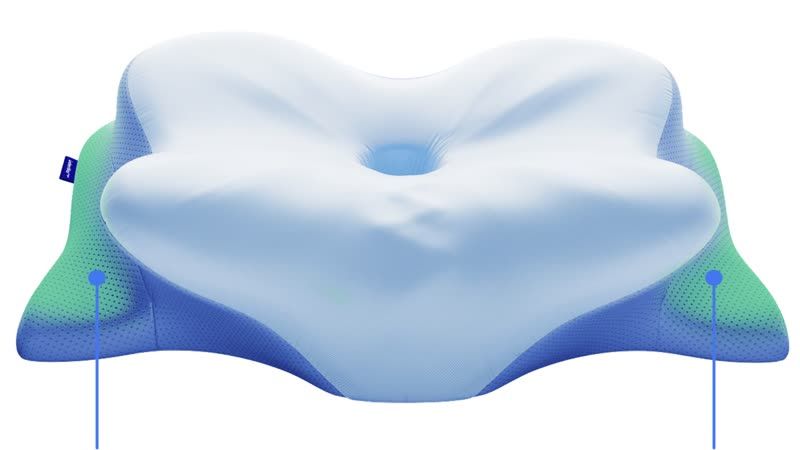
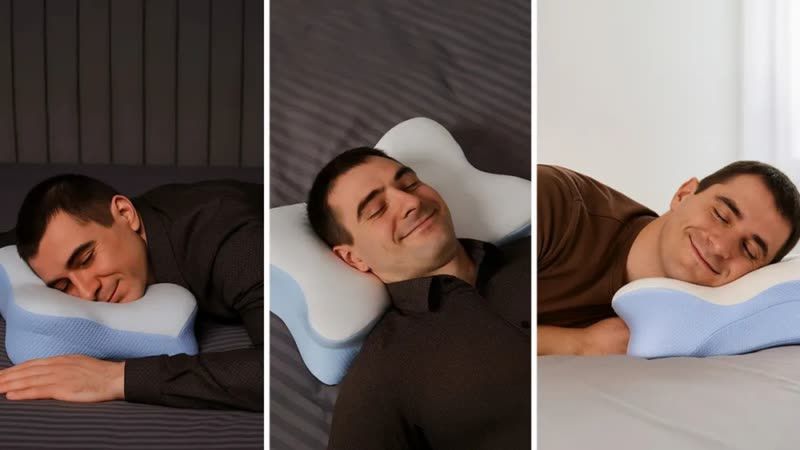
The Swiss team then collaborated with ergonomic engineers to design a pillow built specifically to prevent that backward tilt. The result was a butterfly-shaped contoured pillow that maintains the head and neck at a precise 15-degree angle, keeping the airway open the way pressure never can: mechanically, at the source.
The $59 Answer Nobody at the Sleep Clinic Ever Mentioned
When Dr. Mitchell first mentioned this pillow, called Derila Ergo, I was skeptical. I had a $1,200 machine on my nightstand and thousands of dollars of failed "solutions" in a drawer. Was a $59 pillow really going to do what they couldn't?
But he showed me the data. And it was hard to ignore.
Independent Clinical Results
after 2 weeks
within 7 days
headaches
energy levels
Source: Internal sleep clinic data, 2024, full study available upon request.
That same night, I ordered one. Mike thought I had finally lost it, "Sandra, you own a hospital-grade breathing machine and you're excited about a pillow?"
▶ SEE THE PILLOW CPAP USERS ARE SWITCHING TOThe First Morning, and the First Night Without the Mask
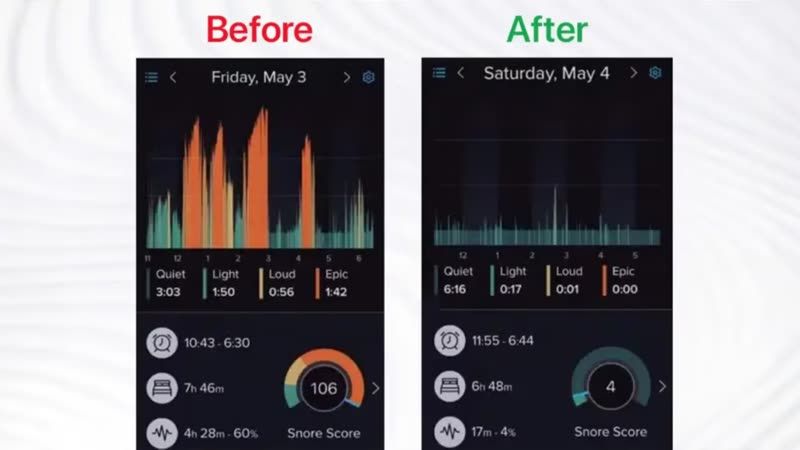
I'll admit, the first night was weird. My neck wasn't used to being "held" in that position. I kept reaching up to feel the contour, half-convinced something was wrong. I still wore the mask, out of habit and fear.
But the next morning, something happened that hadn't happened once in two years of CPAP therapy: I woke up actually rested. No dry mouth. No fog. Just… awake.
The Science Behind Why It Works
Dr. Mitchell broke down the biomechanics for me using a simple visual:
The Derila Ergo works through three integrated systems:
- Precision cervical contour: holds your neck at the scientifically optimal 15-degree angle.
- Adaptive memory foam core: molds to your unique head and neck shape, then holds that position all night.
- Cooling gel infusion layer: disperses heat so you never wake up sweating.
No machines. No masks. No noise. No discomfort. Just proper alignment.
Real People, Real Transformations
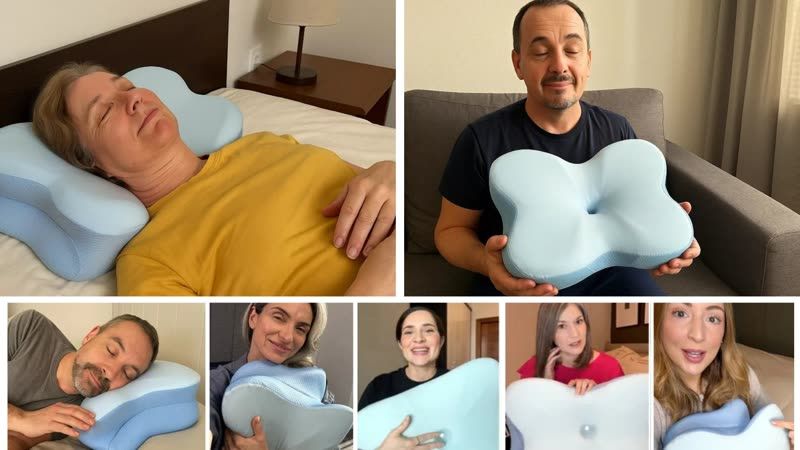
"Two and a half years on CPAP and I dreaded going to bed every single night. Three weeks with this pillow and my machine is in the closet. My sleep app says my snoring is down 85%. I honestly could cry."
"My CPAP gave me a 'perfect' compliance score and a migraine almost every morning for 3 years. Started using Derila Ergo three weeks ago. The morning migraines are completely gone. I keep waiting for them to come back. They haven't."
"I drive a truck for a living. Falling asleep at the wheel was becoming a real fear. After two weeks on this pillow I have more daytime alertness than I've had in 10 years. Probably saved my career, and my life."
"Tried CPAP, hated it. Tried mouthguards, hated them. Tried this, actually loved it. Why didn't anyone tell me about this 5 years ago?"
Who Should Try the Derila Ergo?
You may benefit from this pillow if you experience any of the following:
- You use a CPAP but still wake up exhausted despite a "good" compliance report.
- You hate your CPAP, the mask, the noise, the hoses, the strap marks, or you've already quietly stopped using it.
- You've been diagnosed with mild to moderate sleep apnea.
- You snore regularly (mild, moderate, or severe).
- You suffer from morning headaches, dry mouth, or sore throat.
- You have neck or shoulder pain when you wake up.
- You and your partner are sleeping in separate bedrooms, because of snoring, or because of the machine.
- You have high blood pressure that doesn't respond well to medication.
If two or more of these apply to you, this could be the missing piece you've been looking for.
The Investment That Pays for Itself
One night I sat down and added up what my "managed" sleep apnea was actually costing us:
| Treatment | Typical Cost |
|---|---|
| Sleep study diagnosis | $3,000, $5,000 |
| CPAP machine + annual supplies | $1,500, $3,000 / year |
| Custom dental device | $2,000, $3,500 |
| Couples therapy | $150 / session |
| Soft palate surgery | $10,000+ |
| ★ Derila Ergo (with today's 75% off) | From $59.99, one-time |
And every order today includes these bonuses at no extra cost:
- Free express shipping within the U.S.
- 60-day risk-free sleep trial
- Premium cooling pillowcase (bonus)
- Sleep positioning guide (digital download)
The Hidden Dangers of Giving Up on Your Sleep Apnea
Here's the uncomfortable truth: more than half of CPAP users quietly quit within a year, and most of them end up completely untreated. The Mayo Clinic and Harvard Medical School have both published the same warning about where that leads. Here's the typical 10-year trajectory:
"The single most underestimated risk factor for premature death in adults over 50 isn't smoking. It isn't even diet. It's chronic, untreated sleep deprivation." , Dr. Thomas Mitchell, MD
Why Swiss Engineering Makes the Difference
Switzerland is home to some of the world's most respected sleep research institutions. The Zurich Sleep Laboratory and the Lausanne Center for Sleep Medicine have shaped global sleep medicine for over four decades.
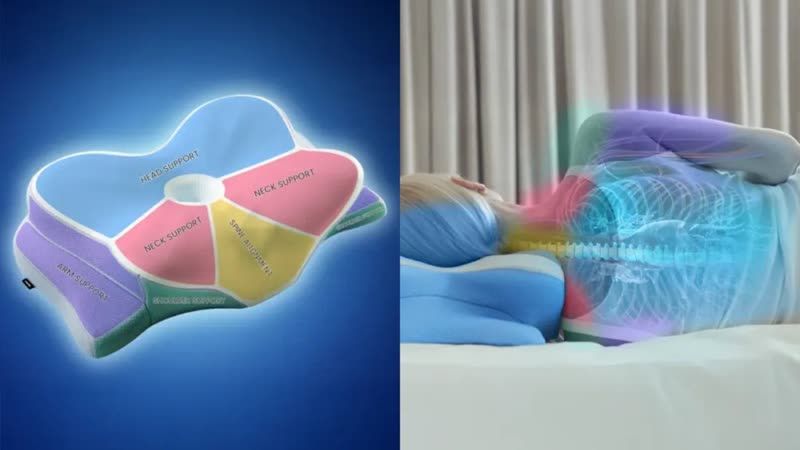
The Derila Ergo was developed in close collaboration with this research community. Three innovations set it apart:
- Precision contouring: millimeter-level shape calibration based on North American head and neck measurements.
- Temperature regulation: proprietary cooling gel layer maintains a 4°F lower surface temperature.
- Adaptive support: high-density foam with a tested lifespan of 5+ years of nightly use.
Today, Derila Ergo is recommended by leading sleep clinics across Switzerland, Germany, and is now expanding throughout the United States.
Stock Alert
Only a few units remain at the 75% discount price.
Once current inventory is sold out, the price returns to $149.98.
The Moment I Knew We Had Our Life Back
It was the Sunday after my second mask-free week.
I was reading in bed when Mike appeared in the doorway, holding his pillow under his arm, like a kid asking to come in from a storm.
He looked at my nightstand. No machine. No hose. No water tank to refill. Just a lamp and a book, like a normal person's bedroom.
"Is there room for me again?"
Eight months of separate bedrooms ended that night. Not because of a $1,200 machine, a $2,800 mouthpiece, or a $10,000 surgery, because of a pillow that holds my head at the right angle.
The 60-Day Challenge That Will Transform Your Sleep
Try the Derila Ergo for 60 full nights. If you don't notice a measurable difference in your sleep quality, snoring, or how you feel in the morning, send it back. Full refund. No questions. No restocking fee.
That's it. They're so confident in this thing that they're willing to eat the shipping both ways if you're not happy.
What do you actually have to lose?
How to Get Your Derila Ergo Today
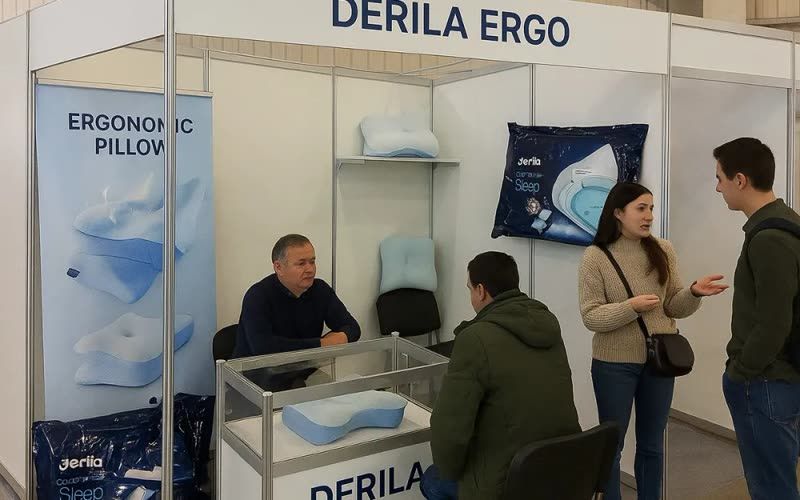
- Click the button below to check if there's still stock at the 75% discount.
- Select your package (most customers choose the 2-pack for the best per-unit price).
- Apply your discount, the 75% off is auto-applied at checkout.
- Choose express shipping, and it arrives at your door in 3, 5 business days.
My Final Thoughts
I'm not a doctor. I'm not a salesperson. I'm a 56-year-old woman from Tucson who wore a mask to bed every night for two years because nobody told me there was anything else to try, and who almost accepted that being exhausted was just her life now.
The one thing they never told me turned out to be a $59 pillow.
Maybe it won't work for you. Maybe it will. But if you're lying awake next to a machine you hate, I'd say it's worth 60 risk-free nights to find out.
Don't strap that mask on for one more night without knowing.
▶ GET DERILA ERGO WITH 75% OFF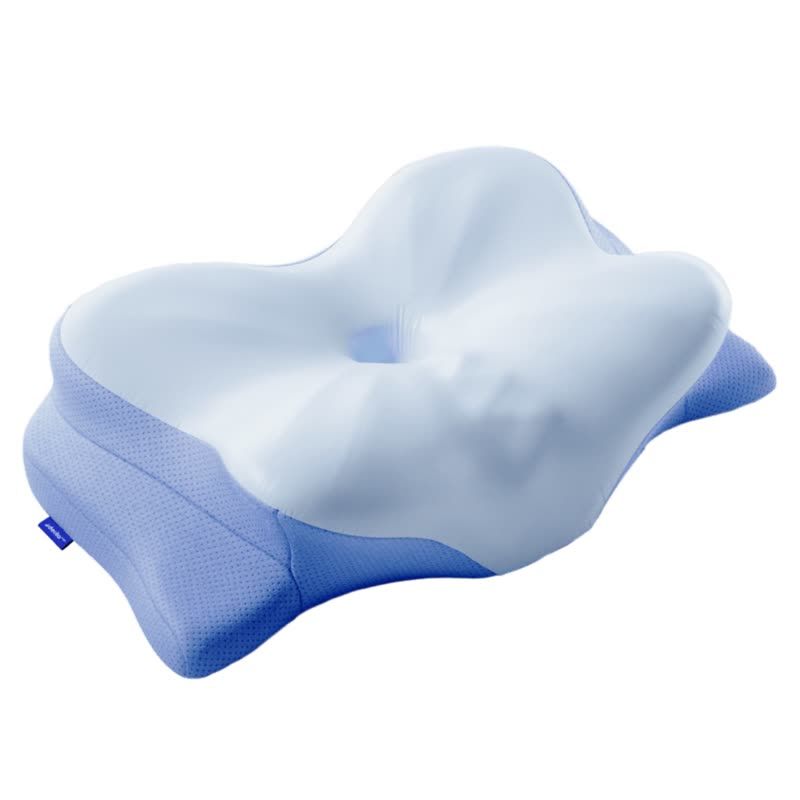
💬 Reader Comments (3,412)
This is me EXACTLY. 3 years on CPAP, perfect compliance, still exhausted every day. Nobody ever once asked about my pillow. Just ordered, crossing my fingers!
Does this really work for side sleepers? That's how I sleep mostly.
Hi Linda, yes, the butterfly shape has raised side wings specifically designed for side sleepers.
Anyone know how long the 75% discount lasts? Want to order one for my dad, he gave up on his CPAP last year and his snoring is scary. But it's payday next week.
I ordered last week and the page said "low stock", I'd not wait if I were you.
I've been on CPAP for 4 years and STILL wake up tired. This article is the first thing that ever explained why. Bought two, one for me, one for my mother. Will report back in 60 days!